

Raising Generous Hearts
By
Tammy Marino reflects on instilling generosity through understanding and responsibility rather than guilt.
Does the transition from Thanksgiving to Christmas ever feel like whiplash? We go from expressing gratitude for gifts of family, friends, food and quality time to endless catalogs, wish lists, letters to Santa and a pile of presents waiting to be wrapped and ribboned.
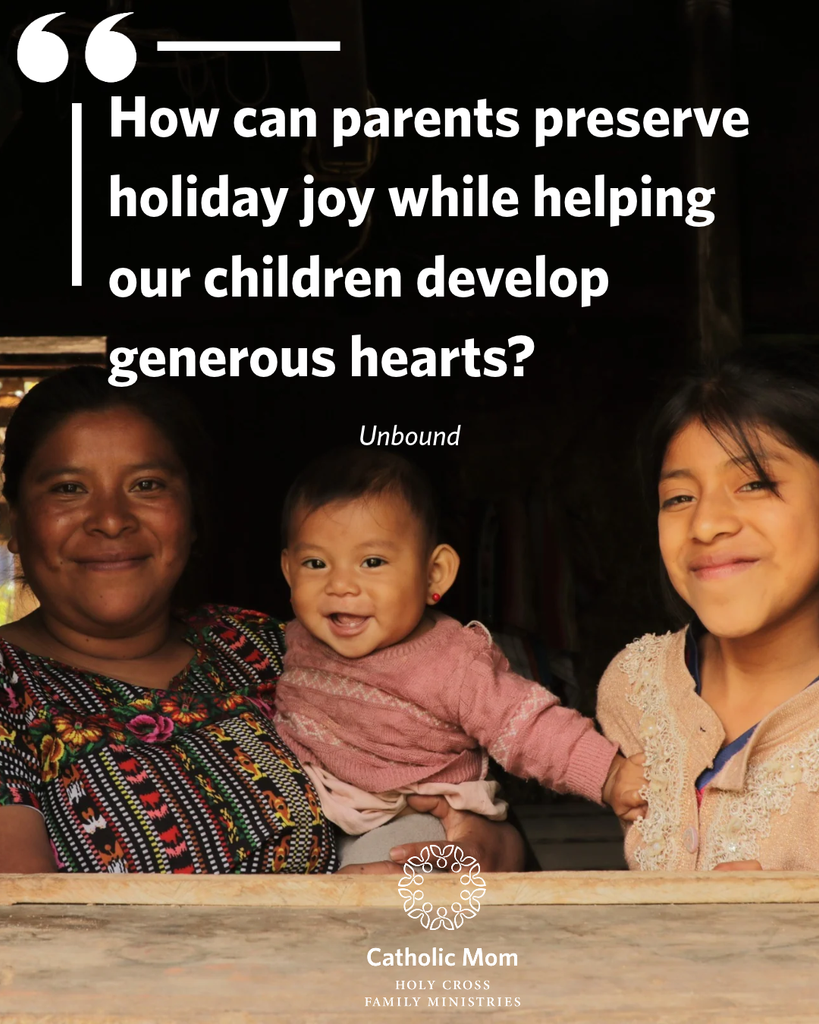
As holiday sales and shopping trips fill our days, we may feel like those moments of appreciation and reflection have slipped from our grasp and been replaced with “I want,” “I need,” “Buy me.” How can parents preserve holiday joy while helping our children develop generous hearts?
It can be tempting to say, “You have so much, and others have so little.” We may hope that a reminder of someone else’s hardship will make our children appreciate what they have. But guilt is a weak foundation for generosity, and it could make giving feel like punishment rather than an opportunity to extend love.
Empathy Through Perspective
I discovered almost by accident the power of helping children connect their actions to other people’s feelings. When my kids were much younger, one of my sons loved talking to his grandparents, who lived in different states, on the phone.
Each time he called, whether to talk about something he learned in school that day or simply the fact that it was raining, he could hear the joy in their voices on the other end of the line.
I recall asking him once when he was about four years old, “Why do you think Peepa, Meema, Grandma and Grandpa are always so happy when you call them?”
I watched his little face, deep in concentration, trying to conjure the right answer. His answer stopped me in my tracks.
“They probably get lonely because they don’t have kids at home, so when I call, they probably feel special and loved.”
Profound words from a preschooler. I like to think that simple question about how his actions affected others helped spark something in him. Putting yourself in someone else’s place provides a richer understanding of how they may be feeling and how even simple acts of generosity, including the gift of time, can have a lasting impact.
Questions teach children the loving act of noticing others, an important first step in building empathy and becoming thoughtful and generous. Generosity isn’t about feeling guilty for our blessings, nor is it about giving everything away. It is about recognizing that our blessings come with responsibility.
We want our children to enjoy Christmas, make wish lists and look forward to gifts. The goal is not to diminish that excitement but to help children discover that giving can be just as joyful, following the example of the Magi, who brought precious gifts to Jesus to celebrate his arrival.
It’s a Family Effort
Children learn generosity best when they see it in action. Parents can make giving a regular habit rather than a response reserved for holidays or moments of crisis.
When children see their parents giving to their parish each Sunday, regularly supporting a charitable organization, bringing food to a neighbor or making time for someone who needs help, they are slowly internalizing what giving looks like. When we talk about why we are doing it, not to congratulate ourselves but to help our children make important connections, we bring the lesson to life.
Children can give their time by helping a younger sibling or a friend who is struggling in a class or needs extra coaching on the soccer field. They can give their attention through a video call with a grandparent. They can give their talents by helping prepare a meal, or by drawing a picture or helping with an organized service project.
Children can learn to take good care of their possessions so that one day, when they outgrow a toy or a favorite dress, they can share it with someone else in an act of love. All these small experiences form habits of the heart.
Choosing What and How to Give
Generosity during the holiday season can take on many different forms. As we enter the season of Advent, it is traditional to take part in almsgiving, acts of service and general kindness as we prepare our hearts to celebrate the birth of Jesus.
Taking time to reflect on the gifts God has given your family and discussing how to share your time, talents and resources with others helps create a clear path toward meaningful acts of charity.
For some families, that might mean choosing one gift from the wish list while setting aside the remainder of the Christmas budget for giving. For others, it might mean selecting gifts from a giving tree, participating in a parish project or choosing a charitable cause together.
What each family decides is far less important than the conversation around it. Those discussions help children understand generosity is part of who we are.
In his Second Letter to the Corinthians, Paul says, “Each must do as already determined, without sadness or compulsion, for God loves a cheerful giver” (2 Corinthians 9:7).
Embracing Giving Tuesday
The Tuesday after Thanksgiving, known as Giving Tuesday, is a day designated for doing good for others. It is a natural opportunity to put these ideas into practice and help bridge that transition from the gratitude of one holiday to the wish-list-making of the next.
Rather than making Giving Tuesday another adult donation that our children don’t know about, consider inviting them into the process. Choose a cause together. Maybe you’ve all had chats around the dinner table about recent catastrophic weather events. Perhaps your family will want to find an organization serving the families impacted. Or maybe your local school district is having a winter clothes drive to ensure kids in the surrounding community are prepared for the colder months.
Maybe your children would like to connect with a family experiencing poverty in Africa, Asia or Latin America and help give them access to the resources and opportunities they need to chart a path out of poverty. Or your family may be interested in helping entrepreneurs grow small businesses that can provide long-term financial stability.
Perhaps each member of the family is drawn to a different cause. Consider giving each child a small amount to contribute to a cause they care about. Or invite them to donate something they can offer through their time or talents.
For older children, provide an opportunity for them to research organizations and explain why they believe one is worthy of support. For younger children, it is better to keep it simple by sharing, “God has given us many good things. Today, we are going to share some of those gifts with someone who needs them.”
Giving Tuesday can become more than a day on the calendar. It can become an annual reminder that generosity belongs in our day-to-day lives.
Gifts for Good
Ultimately, we want to raise children who understand that their blessings have a purpose. We want them to be grateful without being entitled, generous without being pressured, responsible without being fearful, and joyful without being consumed by a constant need for more.
So, when the wish lists appear, we can welcome the excitement, enjoy the anticipation and then gently widen the child’s perspective.
Perhaps even consider having your children make two lists: one for what they are hoping to receive, and one for what they are hoping to give.
One day, the greatest gift you receive may be watching your child’s Christmas morning excitement matched, or even surpassed, by the joy of knowing they helped someone else.
Copyright 2026 Unbound
Images: copyright 2026 Unbound, all rights reserved.


Donate now
More Articles You Might Like
-

The End of an Era
Read More: The End of an EraDavid and Mercedes reflect upon the benefits their daughter, who…





Leave a Reply